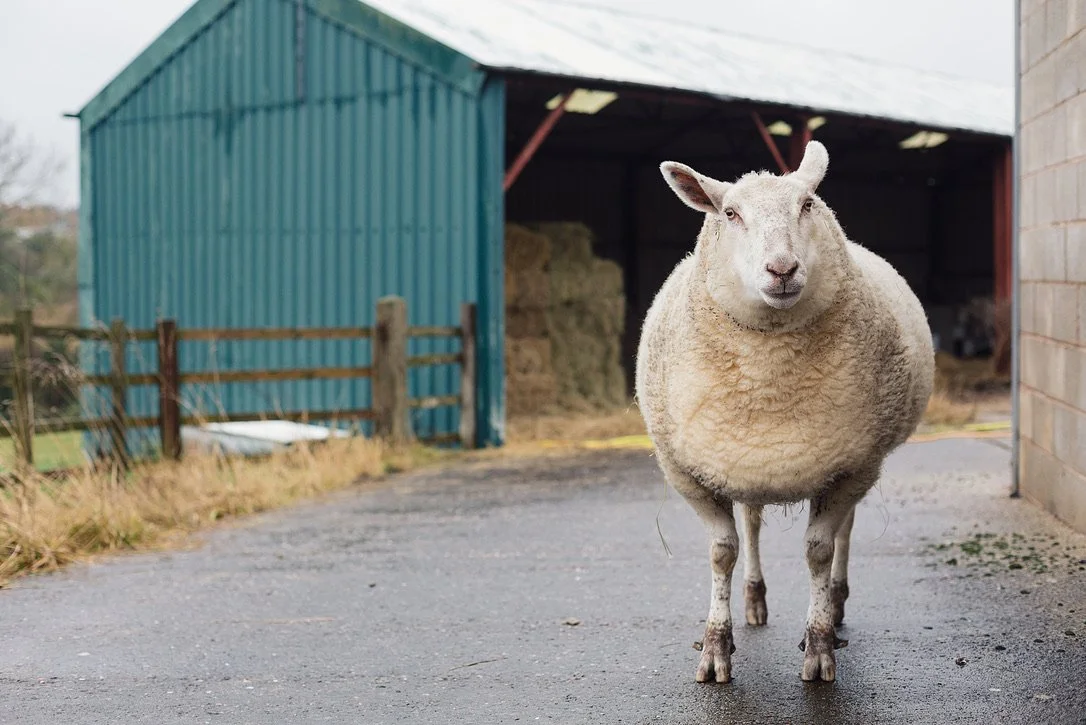
A rescued sheep, Eric, at Surge Sanctuary. The photos and video in this post are provided by We Animals Media.
Humans have lived in close proximity to sheep for thousands of years, and today, there are over a billion sheep on the planet, with many being bred and raised for their meat, milk, or wool. The United States ranks as one of the top consumers of wool. Despite our close proximity to sheep and our frequent use of products derived from them, we often have limited knowledge about their lives.
This post explores the typical lives of sheep farmed for wool, including why sheep produce wool, common farming practices sheep farmed for wool experience, and what happens to sheep when they stop producing wool
Why sheep produce wool
Sheep are descendants of mouflon, wild sheep that inhabit the mountains of Europe and Asia. Wild sheep are often brown or black and have two coats—an insulating undercoat and a longer, protective outer coat. Both of these coats undergo seasonal shedding, naturally keeping the sheep warm in cold weather and cool in hot weather.
Over time, we have selectively bred domestic sheep to have denser, whiter, and softer coats. For comparison, a mature Bighorn ram might produce a fleece weighing around 3 to 5 pounds, whereas a mature Merino ram can yield a fleece weighing between 12 to 20 pounds. While this selective breading benefits the textile industry, it has consequences for the sheep. They can no longer regulate their heat through natural shedding and rely on us to shear them. Shearing in cold weather can result in them freezing to death, while neglecting to shear them during the summer months may lead to death from heat exhaustion. Additionally, sheep are now prone to flystrike, a condition where flies are attracted to the moisture and fecal matter trapped in the sheep’s dense wool, laying eggs on the sheep's skin, and resulting in larvae infesting and feeding on the flesh, causing significant health problems and potential death if left untreated.
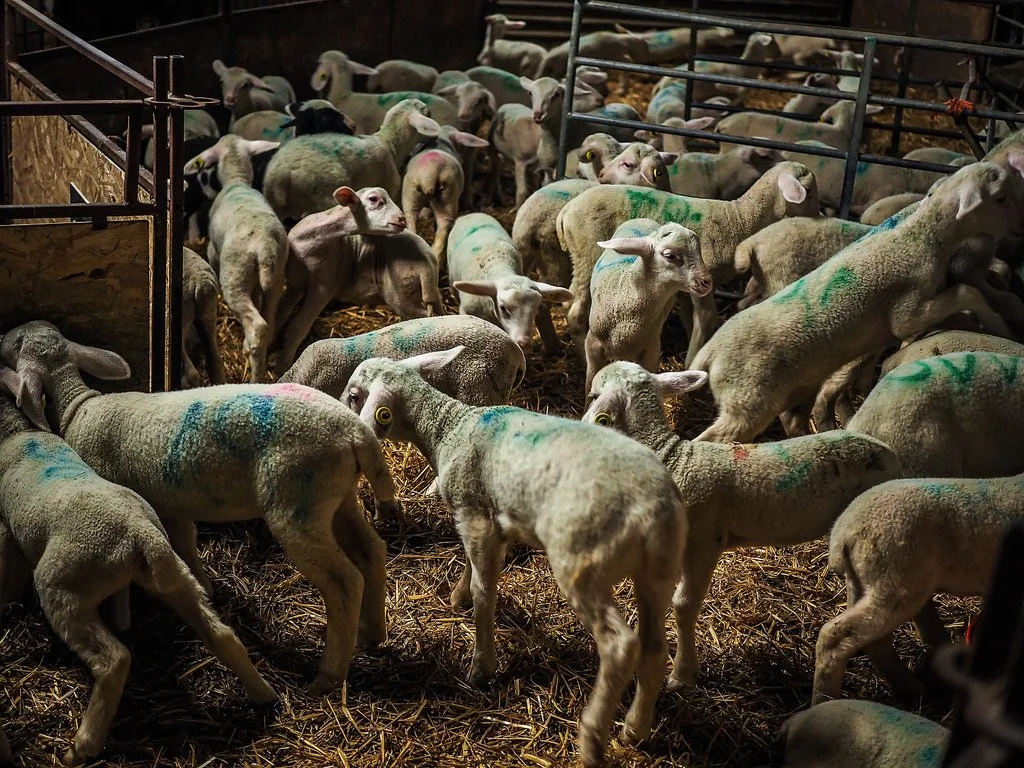
Lambs in an indoor pen at an industrial farm. We can see their ears and bodies are tagged and their tails are docked.
In addition to genetic modifications, we also make alterations to sheep's bodies. Within a few weeks of their birth, we vaccinate lambs, tag their ears, and carry out the following procedures:
Castration: We remove the testicles of male lambs by placing a tight rubber ring at the base of their scrotum, cutting off blood flow to the testicles, which causes them to eventually rot and fall off. We do this to control flock genetics, enhance meat quality to our liking, and make the sheep easier to handle.
Tail docking: We remove the tails of all lambs, either by using a tight rubber ring at the base of their tail to cut off blood flow, causing the tail to eventually rot and fall off, or by cutting it off with a sharp knife. We do this to deter flystrike.
Mulesing: We cut off excess folds of skin at the lamb’s rear end (a result of our selective breeding) with sharp metal shears. We also do this to deter flystrike.
All of this is done without anesthesia. Like us, lambs have intricate nervous systems; the pain and distress they experience during these procedures would likely mirror what we would feel under similar circumstances. They cry, scream, display pain postures, and experience increased stress.
How sheep live day to day
Wild sheep, such as bighorn sheep, typically live in small to medium-sized flocks, consisting of 5 to 15 individuals. These flocks provide social interaction, protection from predators, and access to limited forage resources in their rugged mountain habitats.
We keep sheep farmed for wool in larger flocks, which can vary widely in size, ranging from dozens to hundreds or even thousands of sheep. We raise them in either pasture-based systems, where sheep graze on open land, or in crowded and enclosed industrial sheds, where we feed them diets that optimize wool production.
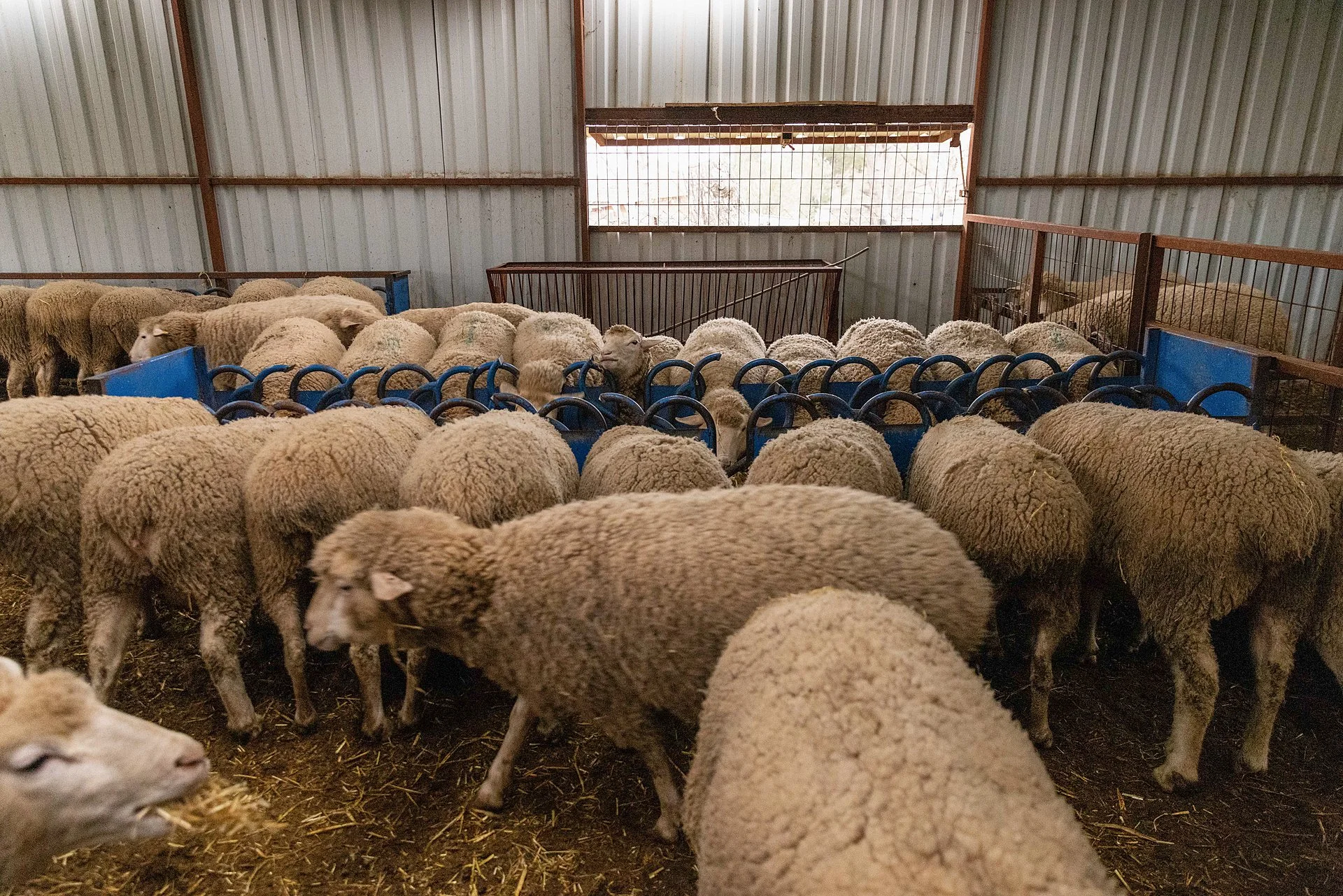
Sheep raised indoors for wool.
Around 6 to 12 months of age, we begin shearing lambs to collect their wool, and we continue this process once or twice a year.
The shearing process is often stressful and painful for the sheep. We pay shearers by the volume of wool they collect, which incentivizes them to work quickly. This commonly results in abuse and injuries to the sheep. Undercover evidence shows shearers routinely beating sheep into submission and, with the shearer’s electric razor, leaving the sheep with cuts and gaping wounds, which are either not addressed or stitched up without anesthesia.
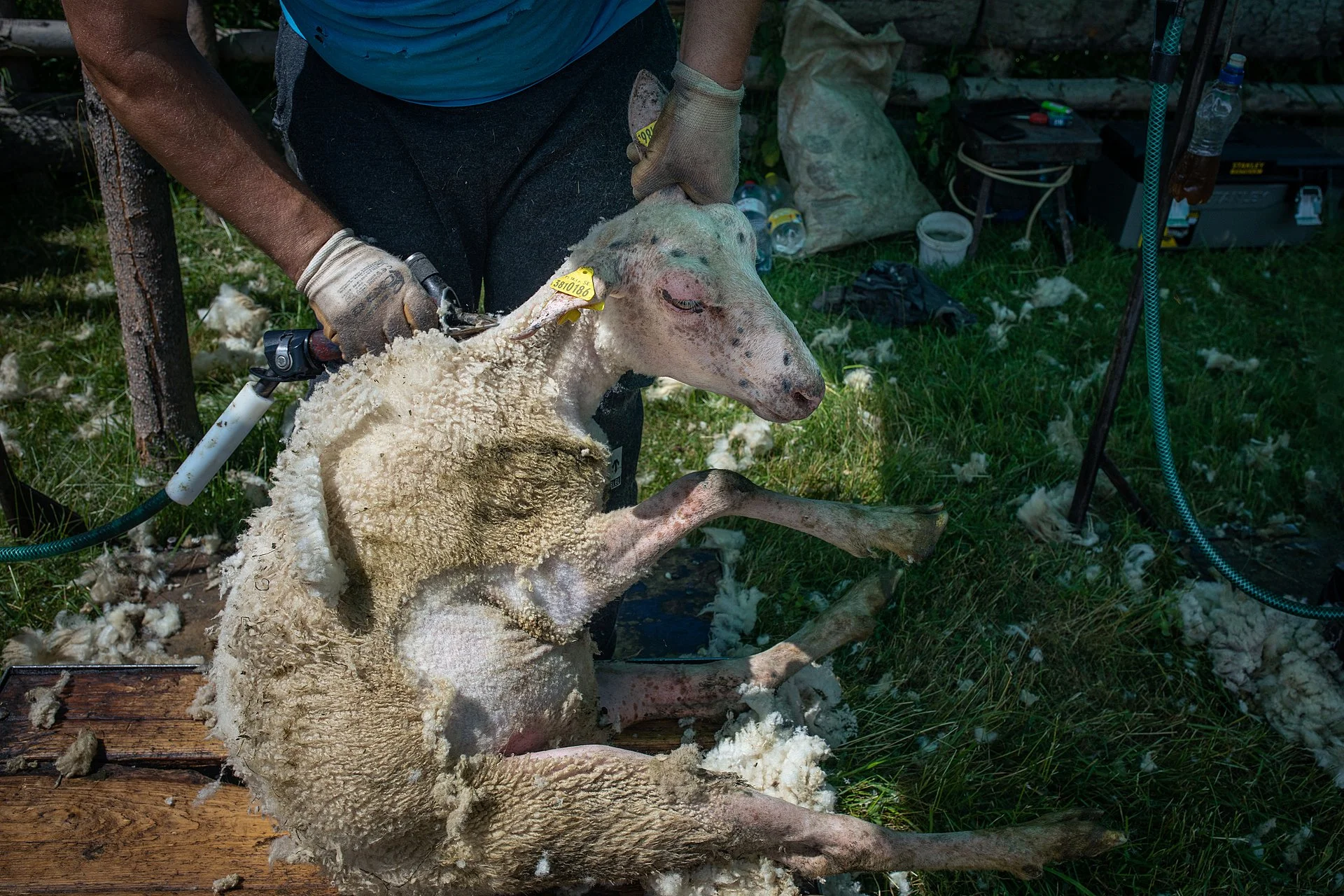
A sheep being sheared.
What happens to sheep when their wool production decreases
On average, wild sheep live between 10 and 14 years, and domestic sheep can live up to 20 years. However, as sheep age, their wool production decreases. To maintain high profits by keeping only the sheep who produce the most wool, we slaughter or sell most sheep when they reach 5 or 6 years of age.
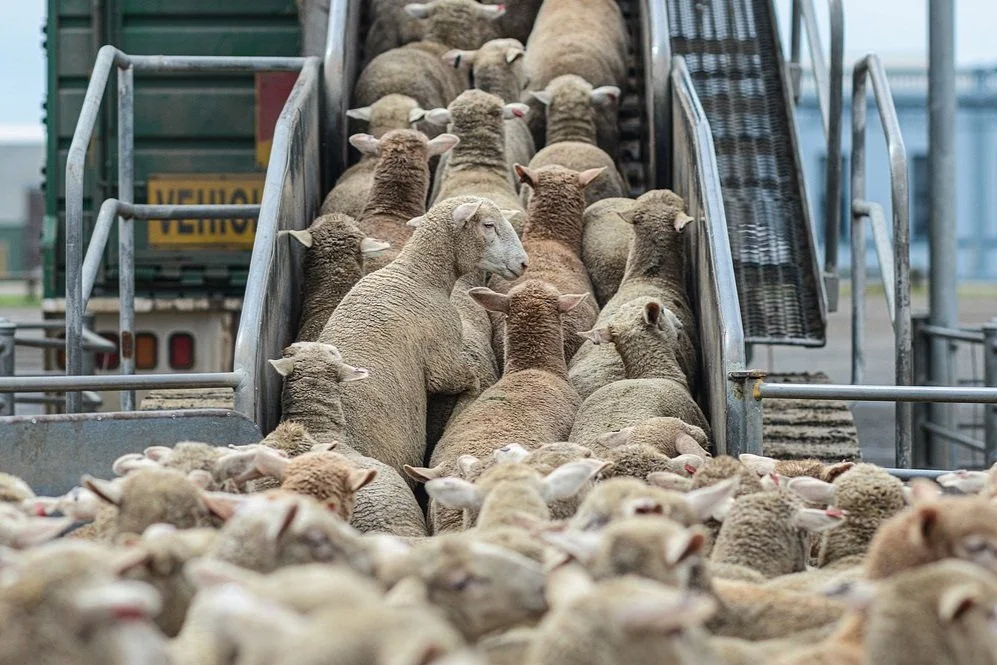
Sheep being loaded into transport trucks, which take them to slaughter, to a new farm, or to ships where they undergo a long journey overseas.
Every year, Australia, one of the biggest wool producers, exports millions of sheep to the Middle East and North Africa, where they are bought for meat. The sheep are loaded onto lower levels of ships, enduring crowded, unsanitary, and poorly ventilated conditions for weeks or months. Due to the conditions and temperatures, many sheep die during the journey. We throw ill or injured sheep in the trash or overboard.
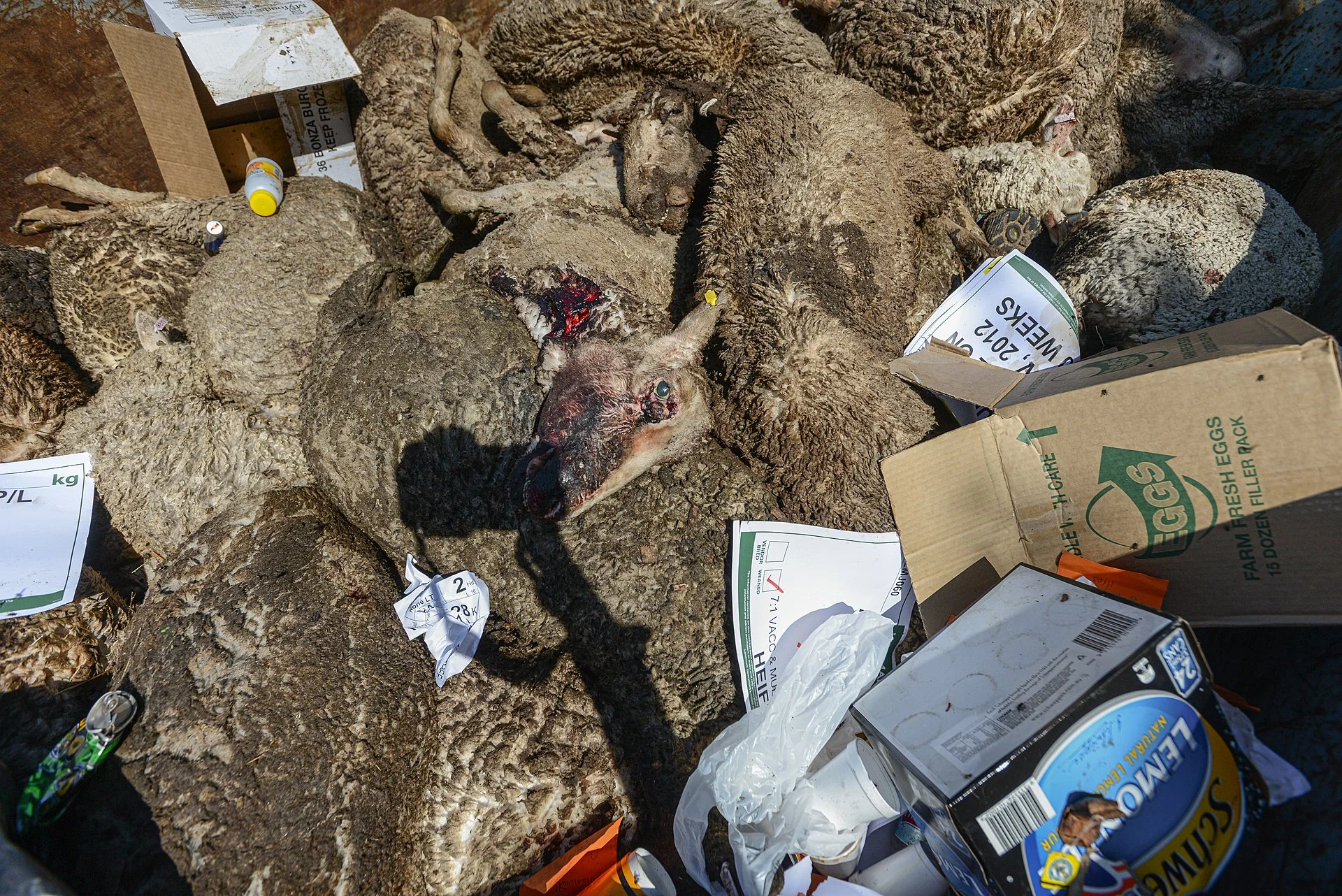
Dead sheep in a dumpster.
For the sheep who reach their destination, purchasers often cut their throats while they are fully conscious.
What we can do
While we may not directly engage in or endorse these actions toward sheep, we inadvertently support and perpetuate these practices every time we purchase products made from factory-farmed wool.
To improve the welfare of sheep farmed for wool, we simply need to adjust our purchasing habits and opt for one of the following approaches:
Commit to purchasing wool exclusively from farms that prioritize ethical treatment of sheep. Keep in mind, marketing can be deceptive. The majority of wool available in the United States is produced on industrial-scale farms, even when it’s imported from countries like China, Australia, or New Zealand.
Abstain from wool altogether. Sheep were not naturally designed to produce excessive amounts of wool, and today, numerous alternatives exist that are more humane for animals and more environmentally friendly. If this is something you're considering, read our post amazing wool anternatives.
As consumers, we have the opportunity to align our actions with our values on a daily basis. If animal welfare holds significance for you, opt for compassion in your shopping choices.